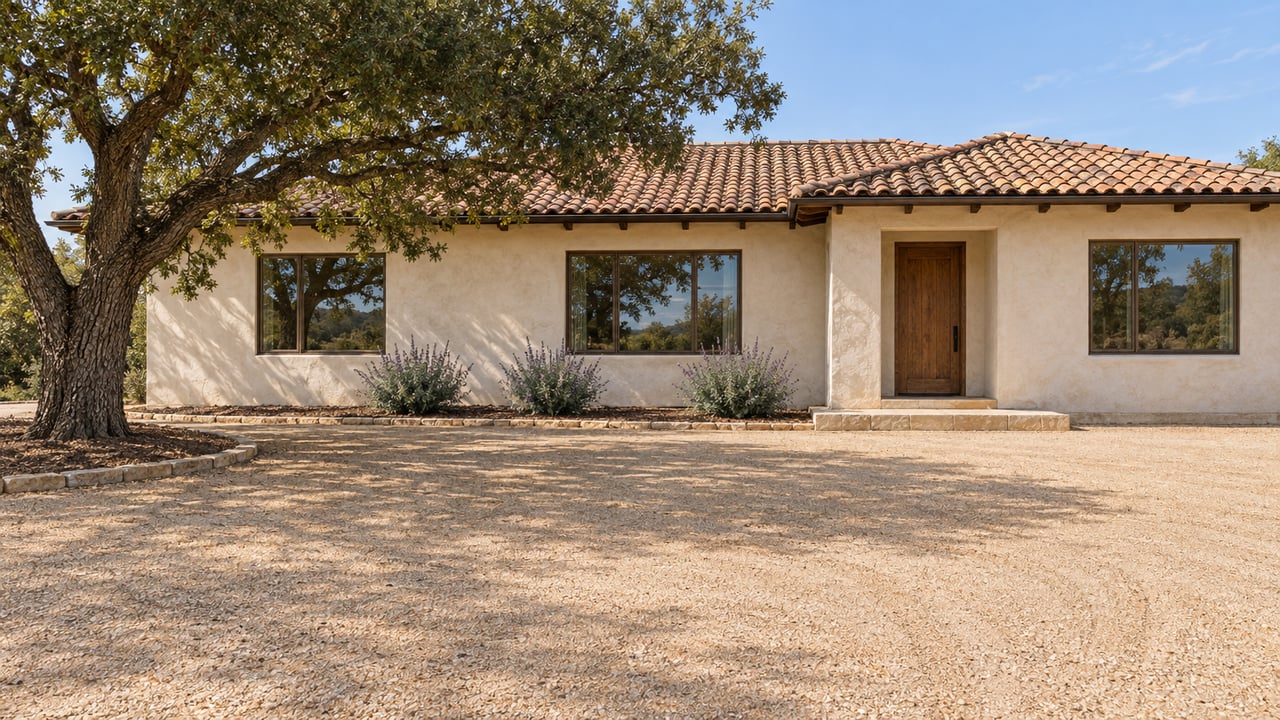
In Oak View, Selling a Well May Soon Start a Ten-Day Water Notice
October 22, 2026
October 22, 2026
Who has to be told when an Oak View property with a private well changes hands? If a Los Angeles Superior Court judge signs the proposed judgment in the Ventura River Watershed Adjudication, the list will include a court-supervised water manager, under a plan written to run with the land.
The proposed Judgment and Physical Solution was filed September 4, 2026. Its trial opens Monday, October 26, before Judge William F. Highberger. For someone weighing a ranch parcel or equestrian property in Oak View, the plan turns on two questions about each well: how much water it pumps in a year, and what paperwork a sale would set off.
The proposed judgment has a section titled "Transfer of Real Property." It reads, in part:
Any Bound Party transferring any real property or water rights subject to this Physical Solution shall notify the transferee of the existence of this Physical Solution and its binding effect on the real property; provide grantee with a copy of this Physical Solution; and notify the appropriate Management Entity of the transfer and file a written notice of transfer within ten (10) days after the transfer of the real property.
The same section says the buyer "shall become a Bound Party." A later section states that the plan is binding on parties' "heirs, successors-in-interest, and assigns." In plain terms, the seller hands over a copy of the plan, the management entity gets a notice, and the obligations stay with the property.
For Oak View, that management entity would be the Upper Ventura River Groundwater Agency. The proposed plan puts the Upper and Lower Ventura River basins in a "Mainstem Management Area" run by UVRGA. UVRGA's basin page names Oak View alongside Mira Monte, Meiners Oaks, Casitas Springs and Ventura as places that use water from the Upper Ventura River Basin.
Many owners assume a small well is exempt from everything. In Oak View, a well actually runs into two separate thresholds, set by two different authorities.
The first is already in effect. UVRGA is the groundwater sustainability agency for the basin under the state's Sustainable Groundwater Management Act. Its board adopted Resolution 2026-01 at its June 11, 2026 meeting. The second is the 5-acre-foot line in the proposed court plan, which is not yet final.
| UVRGA groundwater rules | Proposed court judgment | |
|---|---|---|
| Status | In effect, July 1, 2026 to June 30, 2027 | Proposed; trial begins October 26, 2026 |
| Exemption line | 2 acre-feet a year or less, domestic or non-domestic | Less than 5 acre-feet a year |
| What crossing it means | Extraction fee of $168.00 per acre-foot | Full "Bound Party" obligations, including possible reporting or metering |
| Exempt users still… | Register wells under Ordinance No. 5 | Are bound by the plan, must certify exempt status, and must follow UVRGA rules |
The proposed judgment is clear that the two systems sit on top of each other. Exempt Parties "remain Bound Parties" except where the court's 2022 order says otherwise. They must also follow SGMA and the orders of the groundwater agencies. Being exempt from the court plan does not make a well exempt from UVRGA.
Between 2 and 5 acre-feet a year, a well is mostly sheltered from the court plan but still owes the agency fee. Irrigated pasture, an orchard or a barn can put a well in that range.
At the adopted rate, four acre-feet comes to $672 for the fiscal year. Private well owners are billed twice a year, covering July 1 to December 31, 2026 and January 1 to June 30, 2027. Bills are based on the metered extractions owners report to UVRGA. If no meter readings come in, the fee is based on estimated volumes from the agency's 2019 fee study, adjusted by any estimate protest the board approves or as set by the executive director. So a buyer can ask a seller a specific question: is this well billed on meter readings or on an estimate, and what volume is on file?
UVRGA's Ordinance No. 5 generally requires extraction facilities to report quarterly and use flowmeters. It excludes "Exempt Wells," including de minimis extractors and small non-domestic wells, from extraction reporting. Above 5 acre-feet, the proposed judgment does not require meters everywhere. It lets the management entity ask non-exempt users for production reports, and to require meters or other measurement where needed to build its production inventory.
Put the agency's ordinance next to the proposed judgment and a property sale involving a well starts two separate deadlines. If the judgment is entered as written, the sequence looks like this:
A buyer planning a new well, perhaps for a future arena or a second residence, has an extra step. Under the proposal, new production requires written notice to the management entity, and an acknowledgment back, before applying for a County well permit. The entity then has 120 days to review and comment. That 120-day window should be built into any plan for building on raw land.
The proposal comes from the City of Ventura, Casitas Municipal Water District, Ventura River Water District, Meiners Oaks Water District and the Wood-Claeyssens Foundation. The Ojai Valley News reported that the case grew out of a 2014 cross-complaint in which Ventura named hundreds of property owners in the watershed. It also reported that the plan "expressly does not determine water rights or allocate water, and it does not order cutbacks on pumping." The proponents' executive summary describes the plan's goal as supporting steelhead recovery while "protecting all water rights in the Watershed."
The main open question for owners on the mainstem is cost. Under the proposal, UVRGA would adopt a funding plan within 90 days. That plan could include an assessment on groundwater production, fixed contributions or other options, with a not-to-exceed amount for the first three years. A budget exhibit attached to the proposal anticipates a production assessment of $60 per acre-foot for mainstem producers not covered by the fixed contributions. That figure is an estimate in a proposed document, not an adopted rate. As the Ojai Valley News reported from the September 30 information session, Jennifer Tribo, a technical advisor to Ventura, said the parties who would pay the $60 assessment are already paying UVRGA $168 per acre-foot, and the $60 would come on top of that. The paper also reported that city representatives said the assessment would apply only to large pumpers and surface diverters. On September 30, the court narrowed the remaining legal briefing to two issues. One is what authority the court has to require additional funding. The other is whether it must make a separate finding that the plan protects public trust resources. Trial briefs were due Thursday, October 22. The trial runs October 26 and 27, then continues November 2 and afterward as the court directs.
Some parts of the plan reach beyond any one well. The Ojai Valley News reported that property owners with arundo, the invasive giant reed, are directed to cooperate with the Ojai Valley Land Conservancy. The Conservancy runs a removal program for about 130 acres of arundo, funded by more than $7 million in Cal Fire and state wildlife grants. The same coverage noted that Ventura must stop drawing water at Foster Park when streamflow falls below set thresholds, and that Matilija Dam removal is targeted for around 2035. Riverside acreage in Oak View may have reed along its banks, so a buyer walking a creek-side parcel should note whether arundo is present.
The case website listed an in-person information session for Monday, October 19, at the Oak View Park & Resource Center Auditorium, 555 Mahoney Ave. The proposal itself, objections and court rulings are posted on the adjudication's documents page.
Is the proposed judgment final? No. Nothing in it takes effect until Judge Highberger signs it, and the trial can still change its terms.
Does the UVRGA fee depend on the trial? No. The $168.00 per acre-foot fee under Resolution 2026-01 is already in effect from July 1, 2026 through June 30, 2027, unless the UVRGA board replaces or rescinds it.
Who supplies water to Oak View homes without a well? It depends on the parcel. UVRGA says Ventura River Water District serves neighborhoods from Casitas Springs to the City of Ojai at the Vons shopping center. Ventura County's water purveyor search lists the providers in the area, including Casitas Municipal Water District and several mutual water companies.
This post is general information, not legal, tax or financial advice. Anyone buying or selling a property with a well should confirm their own situation with a water attorney, their water provider or UVRGA directly.
Buying or selling Oak View acreage with a well works best when the well's history is in hand early: the metered volume, the registration and the paperwork a sale would trigger. At Patty Waltcher Team, we gather those records before a property goes to market, and we connect clients with the local well, water and legal professionals who can answer the questions specific to their land. If a property with a well is part of your plans this season, Work With Us.
Stay up to date on the latest real estate trends.

Our clients have made us the top selling team in the greater Ojai Valley for the past decade. Experience the difference our taste and dedication can provide.
PATTY WALTCHER | CA DRE #01176473
730 East Ojai Av
Ojai CA 93023