Ojai Valley Acreage Buying Guide: What Smart Buyers Check
March 5, 2026
March 5, 2026
Picture your mornings framed by pink mountains, citrus on the breeze, and room to breathe. Buying acreage in the Ojai Valley can deliver that lifestyle, but rural parcels come with details you cannot afford to miss. If you understand water, septic, access, utilities, land use, and hazards up front, you set yourself up for a smooth purchase and long‑term enjoyment. This guide gives you a clear roadmap and checklists you can use before you write an offer. Let’s dive in.
The Ojai Valley sits on a mix of municipal systems, mutual water companies, and private wells. Boundaries shift street by street, so you need to confirm who serves a parcel using resources like the county’s water provider map overview.
Beneath the surface, the Ojai Valley groundwater basin is a state‑recognized basin with a local sustainability plan. That means basin rules and current conditions matter for your well. Start with the Ojai Valley basin summary to understand how groundwater is monitored and managed.
Finally, large parcels often intersect hillside, riparian, and wildfire zones. Expect defensible‑space requirements, potential oak‑tree or habitat considerations, and site‑specific engineering during permitting.
Ojai’s groundwater is managed under California’s Sustainable Groundwater Management Act. Local agencies monitor levels and coordinate recharge, so it is smart to confirm if your parcel falls within a managed area and whether any reporting or pumping limits could apply.
Ventura County requires well permits and enforces standards for domestic supply. For a typical single‑family home, the county generally expects a domestic well to sustain about 5 gallons per minute continuously for 24 hours with proper recovery. You should insist on an approved pump test report before you release contingencies. Review the county’s well permitting guidance and pump test standards on the Groundwater and Well Permits page.
Quantity is only half the picture. The county’s Environmental Health program oversees private well water quality. Ask for recent lab results for key analytes such as nitrate, total coliform and E. coli, and consider volatile organic compound screening after wildfire events. Learn more about private well water quality on the Drinking Water program page.
If a well is shared, Ventura County requires a written, recorded shared‑well agreement. Ask for the recorded easement and agreement, confirm transferability, and make sure your title report reflects the rights and responsibilities.
Not every acreage parcel connects to sewer. Ventura County Environmental Health oversees Onsite Wastewater Treatment Systems. For vacant land or expansions, you will likely need soils and percolation testing and to show there is enough area for a compliant leach field. Start with the county’s overview of septic and percolation requirements on the Environmental Health page.
If sewer is available, you will need a will‑serve or connection letter from the serving agency and clarity on any capacity or impact fees. Your choice between sewer and septic can affect design, setbacks, and total project budget.
Many Ojai parcels rely on private roads or historic easements. The county does not maintain private roads, and lenders often want a recorded road‑maintenance agreement. The county can also require off‑site road upgrades when new development increases traffic. Review standards and substandard access notes on the Transportation and Roads page.
Before you write an offer, order a title report that shows all recorded easements and rights‑of‑way. On site, verify emergency vehicle access, turnouts, driveway grades, and bridge or culvert conditions. Ask for any road work invoices or agreements among neighbors.
Ventura County’s land‑use framework supports agricultural preservation, and some parcels carry Williamson Act contracts that can reduce property taxes while limiting certain uses. Confirm zoning, any contracts, and compatible uses during due diligence using the county’s Agricultural Land Preservation guidance.
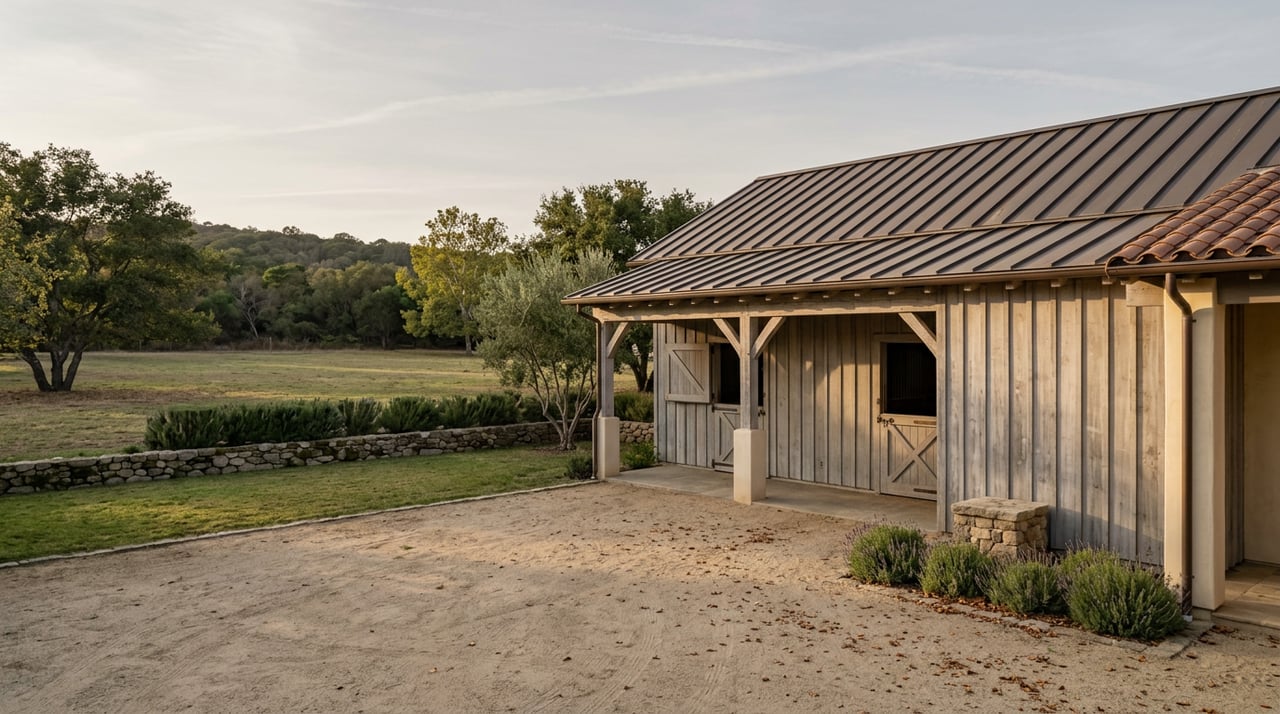
Many rural zones allow accessory equestrian facilities like barns, corrals, and arenas. Larger commercial boarding, training, or events may require discretionary permits and specific management for manure, drainage, and setbacks from creeks. For use allowances and best practices, consult the county’s Agricultural Commissioner resources.
Expect a mix of permits: building, grading for pads and driveways, well and septic, encroachment for work in the right‑of‑way, and sometimes discretionary land‑use approvals for new uses or parcel adjustments. Typical reviews include fire safety and defensible space, geotechnical and slope stability on hillsides, biological and riparian surveys, and oak tree protection. The county may condition approvals on off‑site road work or participation in improvement fees.
Wildfire exposure is a fact of life across much of Ojai. Use the state’s Fire Hazard Severity Zone maps and plan for defensible space around structures. Insurers increasingly require proof of compliance.
On the valley floor, some properties sit within FEMA floodplains or near historic channels. Hillside parcels can involve landslide or mudflow risks. Ventura County Engineering Services can flag floodplain status and slope considerations during review. See their scope of services on the Engineering and Land Development page.
Many parcels include riparian corridors and oak woodlands. If your project could affect habitat or protected trees, anticipate a biological assessment and arborist input. Conservation easements may also shape what you can build and where.
Ready to find the right acreage and navigate the details with confidence? The Patty Waltcher Team pairs deep local knowledge with concierge‑level vendor networks to help you diligence wells, septic, access, and permits the right way.
Stay up to date on the latest real estate trends.
Our clients have made us the top selling team in the greater Ojai Valley for the past decade. Experience the difference our taste and dedication can provide.
PATTY WALTCHER | CA DRE #01176473
730 East Ojai Av
Ojai CA 93023