Preparing A Saddle Mountain Ranch For The Market
June 18, 2026
June 18, 2026
If you are getting ready to sell a ranch in Saddle Mountain Estates, you are not just preparing a house. You are preparing acreage, access, equestrian features, views, and the overall feeling of stewardship that buyers expect in this part of the Ojai Valley. A strong pre-listing plan can help your property feel more valuable, easier to understand, and ready for serious interest. Let’s dive in.
Saddle Mountain Estates is often described as an Ojai-area equestrian community with bridle trails, mountain and valley views, and parcels that range from about 2 to 5 acres. That means buyers tend to look at the property as a full lifestyle offering, not just an interior floor plan.
In practical terms, your prep should go beyond fresh paint and tidying the main home. Buyers will notice how the land is used, how horse areas function, how easy it is to move around the property, and whether the views and open space feel protected and well maintained.
Before photography, pricing, or marketing begins, it helps to confirm the basics of the parcel. Ventura County’s APN-based zoning tool and County View GIS can help verify the APN, zoning, city or county boundary, easements, hazard overlays, parcel maps, survey records, and historical aerial imagery.
This step matters because rural properties can have details that affect how buyers view usability. If your listing presentation is clear about boundaries, access, and known land-use facts, buyers often feel more confident from the start.
Take a fresh look at anything that changes how the property functions. That includes driveway regrading, retaining walls, drainage work, and circulation changes for vehicles or trailers.
Ventura County’s permit guidance shows that grading, parcel maps, tract maps, and related land-use actions go through formal county review. If you have completed work over time, it is wise to match visible improvements to permit history before your home hits the market.
Saddle Mountain buyers may care about trailers, gates, turnarounds, and trail-oriented usability. Ventura County notes that the Ojai Valley Trail is a 9-mile trail with a dirt bridle path for horseback riders, and the county trail network includes more than 20 miles for hiking, biking, and horseback use.
That does not mean every buyer will use the trails the same way, but it does mean access and circulation can shape value. Clean gate lines, clear driveway edges, and easy maneuvering areas can make a strong first impression.
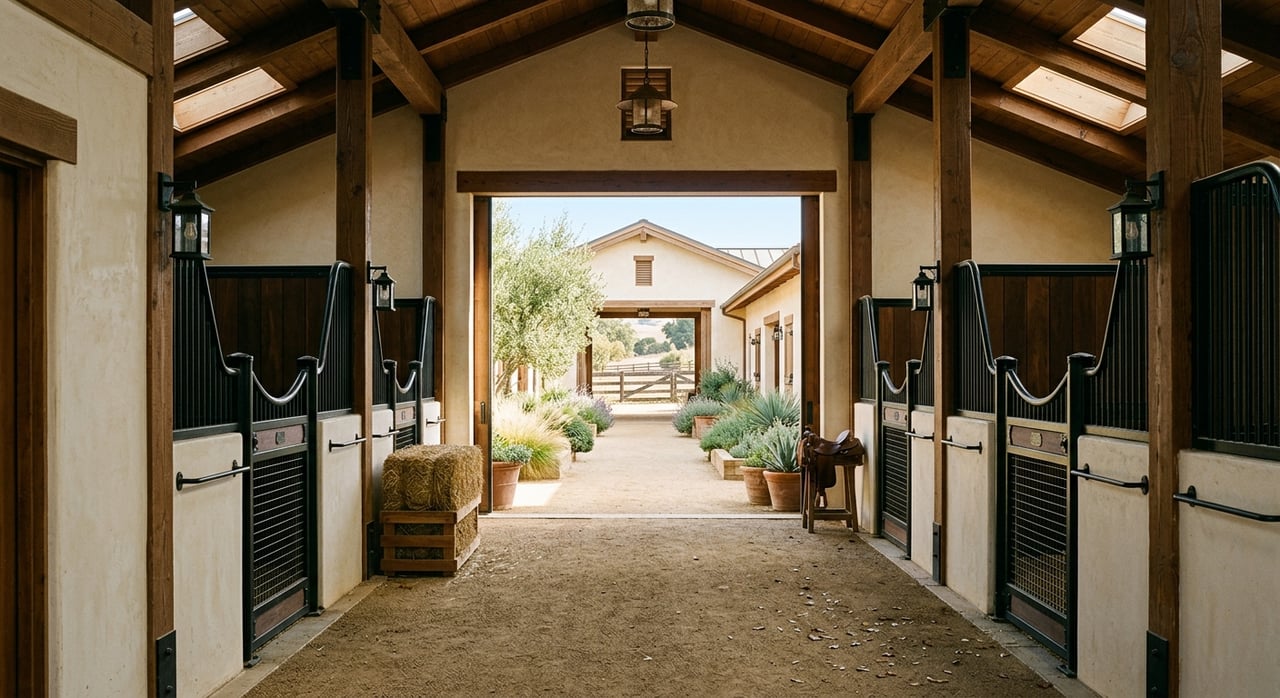
Barns, tack rooms, paddocks, arenas, and utility buildings should feel functional, organized, and documented. In a ranch setting, these spaces are not secondary. They are part of the core property story.
Ventura County lists barns under 2,000 square feet, storage sheds, ground-mounted solar panels, electrical service for agricultural wells, and grading among common permit categories. If you have added, replaced, or upgraded these features, gather permits, contractor invoices, and service records now.
A barn does not need to feel staged in the traditional sense. It does need to feel cared for, safe, and easy for a buyer to inspect.
Focus on a few high-impact steps:
When these areas look maintained, buyers can picture immediate use rather than future cleanup.
Many of the most important ranch systems are the ones buyers cannot see right away. Wells, septic systems, irrigation pumps, storage tanks, and power to outbuildings all play a major role in buyer confidence.
Ventura County Environmental Health covers individual sewage disposal systems, and county land-use staff review domestic water supplies, sewage disposal, solid waste disposal, and other environmental health issues as part of land-use review. For sellers, that makes documentation especially important.
If your property has a well, save time by pulling together records before the listing launches. Ventura County’s well ordinance makes clear that well construction and destruction are regulated locally.
Useful records may include:
Even if a buyer asks for more during escrow, starting with an organized file shows care and transparency.
If your septic system has been serviced, inspected, or repaired, keep those records together. If irrigation pumps, tanks, or related utility equipment have been updated, save those invoices too.
You do not need to overwhelm buyers with paperwork on day one. You do want to be ready with a clean, credible package when questions come up.
In rural Ventura County, wildfire readiness is not a side issue. It is a major part of preparing a property for the market.
Ventura County Fire Department says property owners are expected to keep property free of fire hazards or nuisance vegetation year-round. Common requirements include 100 feet of vegetation clearance from structures and 10 feet for road access, and effective March 1, 2025, the county also implemented a full 5-foot non-combustible Zone 0 for new buildings and additions.
If your ranch has mature landscaping, open land, and equestrian areas, wildfire prep should be thoughtful and visible. Trim vegetation around structures, clean up overgrowth near access roads, and remove obvious nuisance buildup.
This work can improve safety, support compliance, and help the property show better. It also signals to buyers that the ranch has been managed with care.
For properties in high or very high fire hazard severity zones, California requires an AB38 defensible-space compliance report at sale. Ventura County Fire Department also notes that the county’s defensible-space rules are required by state law and a local vegetation-management ordinance that is more restrictive than state law.
If your property may fall within one of these zones, it is smart to investigate early. Waiting until escrow can create avoidable stress and delays.
If you are thinking about making larger landscape changes before listing, check the rules first. Ventura County Fire Department states that landscape and fuel modification plans are required for new buildings, accessory dwelling units, and modifications to existing landscape.
That does not mean every cleanup task requires the same review. It does mean you should be thoughtful about larger pre-sale projects, especially in fire-prone settings.
California’s Transfer Disclosure Statement is a condition disclosure, not a warranty. The Natural Hazard Disclosure framework covers fire, flood, earthquake fault, seismic hazard, and related zone-based issues.
For a Saddle Mountain ranch, it is helpful to think broadly and early about what a buyer may need to understand. That can include hazard-zone context, visible site conditions, utility systems, and whether nearby farmland or grazing land could make right-to-farm style disclosures relevant.
Good disclosure prep is not about flooding buyers with paperwork. It is about making the property easier to understand.
When records are organized and known issues are addressed thoughtfully, the transaction often feels steadier. That kind of preparation supports trust and can reduce surprises later.
For a property like this, the strongest marketing angle is usually stewardship. Buyers are often reassured by clear documentation, serviced systems, permit-aware improvements, and land that looks easy to inspect and easy to understand.
Cosmetic updates still matter, but they should support the larger picture. The goal is to preserve the rural character and lifestyle appeal while making the ranch feel polished, credible, and market-ready.
In Saddle Mountain Estates, the appeal often centers on a combination of land and lifestyle. That can include acreage, privacy, horse usability, mountain or valley views, and the overall condition of access roads, gates, and outdoor spaces.
Your prep should help those features read clearly in person and in marketing materials. If a buyer can quickly understand how the property lives, they are more likely to see its full value.
If you want a focused plan, start here:
For many sellers, this kind of disciplined prep does more for market confidence than a long list of cosmetic projects.
Preparing a Saddle Mountain ranch for the market takes more than a quick refresh. It takes a thoughtful look at land use, access, records, wildfire readiness, and the lifestyle details that serious buyers care about most. If you want guidance on presenting your property with clarity, discretion, and local insight, the Patty Waltcher Team can help you prepare every detail with care.
Stay up to date on the latest real estate trends.

Our clients have made us the top selling team in the greater Ojai Valley for the past decade. Experience the difference our taste and dedication can provide.
PATTY WALTCHER | CA DRE #01176473
730 East Ojai Av
Ojai CA 93023